
The Best Bamboo Utensils: Tested & Toxic-Free
Here’s something that shocked me when I started researching: multiple studies have shown that plastic cookware can add thousands of microplastic particles to your food every single year. And we’re not even talking about the ones from packaging or storage containers. This is just from spatulas, spoons and cutting boards that you use every day. Wanna guess what type of cookware doesn’t leach plastics? You guessed it, bamboo!
Switching to bamboo utensils eliminates almost 100% of those microplastics while preventing roughly 2,400 disposable plastic forks and spoons from hitting landfills annually, per household. Research from Plymouth Marine Laboratory found that bamboo utensils introduced zero microplastics into prepared food, while plastic cookware contaminated every meal. And what’s more: bamboo biodegrades in 50-120 days compared to plastic’s 400+ years. That sounds a lot better, doesn’t it?
I switched my kitchen to bamboo six months ago after digging into the research, and I haven’t looked back. The tools feel sturdier, don’t stain like plastic did, and I sleep better knowing my kids aren’t eating microscopic plastic particles with every meal.
The best starter option? Totally Bamboo 5-Piece Cooking Utensil Set at just $12.99. It’s FSC-certified, durable enough for daily cooking, and replaces the five plastic tools most families constantly use. Let me show you why this matters more than you might think.
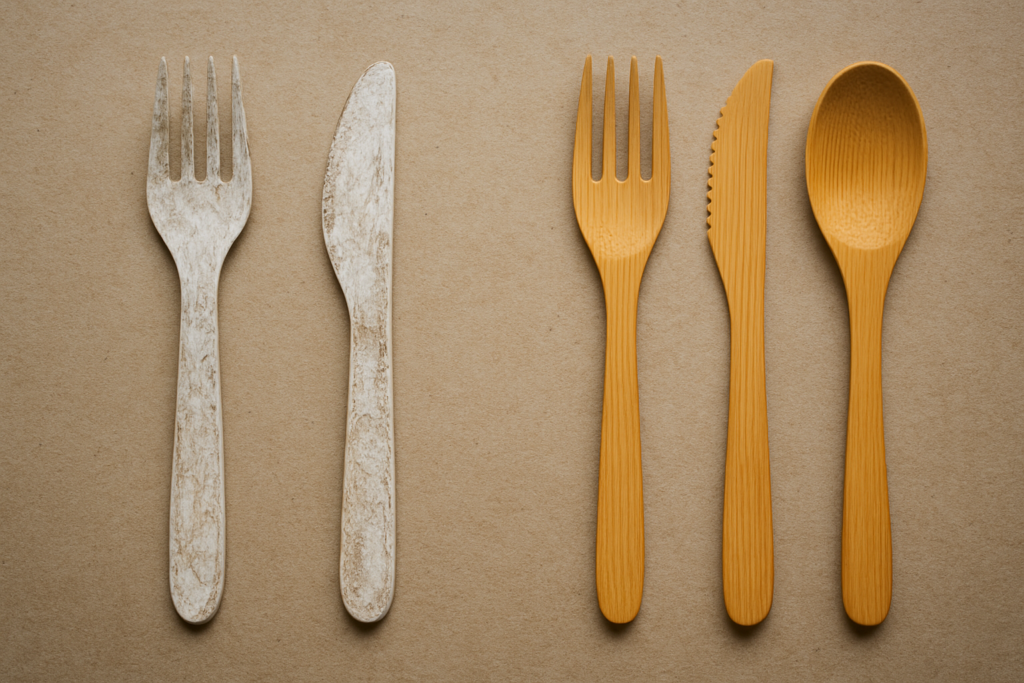
Health Benefits of Bamboo Utensils: What You Need to Know
The Microplastic Problem Nobody Talks About
Plastic utensils aren’t inert. They shed microscopic particles every single time you use them.
A 2024 study published in Science of the Total Environment tested how much microplastic gets released from everyday cooking. Researchers prepared food using plastic cutting boards, spatulas, and containers, then analyzed it for contamination. The results? Plastic boards released up to 196 microplastic particles into each ounce of meat during normal chopping, while bamboo boards released none. I don’t know how much you cook, but that adds up pretty quickly.
Think about it. Every time you chop vegetables on a plastic board or stir pasta with a plastic spoon, tiny particles break off and end up in your food. Assuming one meal prepared daily with plastic cookware, researchers calculated between 2,000 to 5,000 microplastics added to homemade food annually.
What does this mean for your family? Those particles don’t just pass through your system. Scientists have found microplastics in human brains, stomachs, lungs and bones, with research linking them to higher risk of stroke, inflammatory bowel disease and dementia.
Bamboo eliminates this completely. The material is dense and doesn’t shed particles during normal use. No microscopic plastic in your kids’ scrambled eggs. No particles floating in your soup. Just clean, safe cooking. Doesn’t that sound nice?
Chemical Leaching: What’s Actually Getting Into Your Food
The particle problem is one thing. Chemical leaching is another concern entirely.
Plastic releases chemicals when heated – especially BPA and phthalates, which are hormone disruptors. Research shows that at cooking temperatures of 200°C and 250°C (392°F and 482°F), plastic polymers release several chemical components, with melamine polymer releasing formaldehyde, a known toxicant and carcinogen.
These chemicals can affect everything from thyroid function to children’s development. And here’s the thing: you can’t see or smell them. Your plastic spatula might look fine, but when it hits that hot pan, chemicals are transferring into your food.
Bamboo is certified BPA-free and releases zero chemicals, even under high heat. It’s just… bamboo. No synthetic compounds, no chemical treatments (when you buy certified products), no hormone disruptors hiding in your dinner.
For families with young kids, this matters. Their developing bodies are more vulnerable to hormone-disrupting chemicals than adults. If you want guaranteed chemical-free utensils, I recommend Jungle Culture Bamboo Cutlery. They’re certified 100% natural with third-party testing, so you know exactly what is (and isn’t) touching your food.
Natural Antibacterial Properties
Here’s something that surprised me: bamboo naturally resists bacteria growth in ways plastic doesn’t.
Research published in the journal Antibiotics identified lignin – a natural compound in bamboo’s structure – as responsible for the antibacterial properties. Specifically, the C-O and C-H functional groups in bamboo’s lignin were identified as the chemical constituents responsible for antibacterial efficacy.
What does this mean practically? Bamboo is more forgiving if you’re not perfect about washing dishes immediately. It’s safer when prepping raw chicken or handling foods that can harbor bacteria. And it stays fresher-smelling over time because bacteria can’t colonize the surface as easily as they do on plastic.
One caveat: The antibacterial properties depend on preserving the bamboo lignin’s integrity during manufacturing. This is why buying certified bamboo products matters – cheap processing can strip away the natural compounds that provide these benefits.

Environmental Impact of Bamboo Utensils: Real Numbers
How Much Plastic Are We Really Saving?
Let’s talk actual numbers instead of vague claims.
According our research, the average family uses approximately 46 plastic utensils per week. That includes school lunches, takeout containers, picnics, parties – all those times when disposable seems easier.
Here’s the math: 46 utensils per week × 52 weeks = 2,392 plastic utensils per year. That’s just one household.
Now picture a pile of 2,400 plastic forks and spoons. That’s what one family sends to landfills annually when relying on disposables. A single set of bamboo utensils – whether it’s a $13 starter set for home or a $20 portable set for lunches – replaces all of that. For years.
When you visualize it that way, the environmental impact becomes real. It’s not abstract “save the planet” talk. It’s literally preventing a massive pile of plastic from existing in the first place.
Biodegradability: What Happens After You’re Done
Plastic utensils take 400 to 1,000 years to break down in landfills. The plastic fork from your takeout lunch today will still exist in the year 2425.
Bamboo? The science is clear and encouraging. A study on bamboo fiber products found they initially fragmented on day 42 and completely degraded in soil by day 70. Recent research published in Nature Communications showed bamboo-based plastic can biodegrade in soil within 50 days.
Thin bamboo items like utensils or straws decompose in a few months in proper composting conditions, while thicker plates or boxes may take up to 1-2 years. Either way, we’re talking weeks to months – not centuries.
The decomposition process is natural and harmless. Microorganisms in soil first decompose the tapioca starch, hemicellulose, and cellulose in bamboo products, then finally decompose the lignin. The result? Rich soil instead of permanent pollution.
When your bamboo utensils finally wear out after 18-24 months of daily use, you can literally toss them in your compost bin or garden. They’ll return to earth in a matter of weeks, enriching your soil. Try that with plastic and see how it goes.
Carbon Footprint (The Simple Version)
Bamboo grows insanely fast – some species shoot up 3-4 feet per day during peak season. Some bamboo species grow 91 cm (36 inches) within 24 hours. A bamboo plant reaches full maturity in 3-5 years, compared to 20-40 years for the hardwood trees used in traditional wooden utensils.
While growing, clumping bamboo purifies air up to 30% more effectively than any other plant, absorbing more CO2 from the atmosphere than most trees. This means bamboo farming actually cleans the air while producing raw materials.
Manufacturing bamboo utensils also uses less energy than producing plastic ones. Plastic requires petroleum extraction, refining, and high-heat molding. Bamboo requires cutting, drying, and shaping – mostly mechanical processes with minimal energy input.
Bottom line: Bamboo is better for air quality while it’s growing AND after you dispose of it. It’s one of the few materials where both production and end-of-life phases actually help the environment.
Want to make even more eco-friendly swaps? Check out my complete eco-kitchen setup guide where I walk through 15 changes that cut waste, save money, and protect your family’s health!
Real-World Performance: What Research Shows
Heat Resistance
One concern people have before switching: Will bamboo hold up to real cooking temperatures?
Studies testing kitchen utensils at common cooking temperatures of 200°C and 250°C (392°F and 482°F) found plastic polymers released chemical components at these temperatures, while bamboo remained stable. This covers virtually all home cooking scenarios – sautéing, frying, even high-heat stir-fries.
Bamboo handles everything from scrambled eggs to high-heat cooking without warping or releasing any gross chemicals into your food. That is, assuming you don’t leave your bamboo spatula sitting in a screaming-hot pan while you go check your e-mail. I cannot guarantee that this wil lead to a good outcome.
The best heat-resistant option I’ve found is the Bambu All-Purpose Spatula Trio Set at $22.95. These are designed specifically for cooking, with thin beveled edges perfect for flipping delicate fish and sliding under eggs without breaking any yolks.
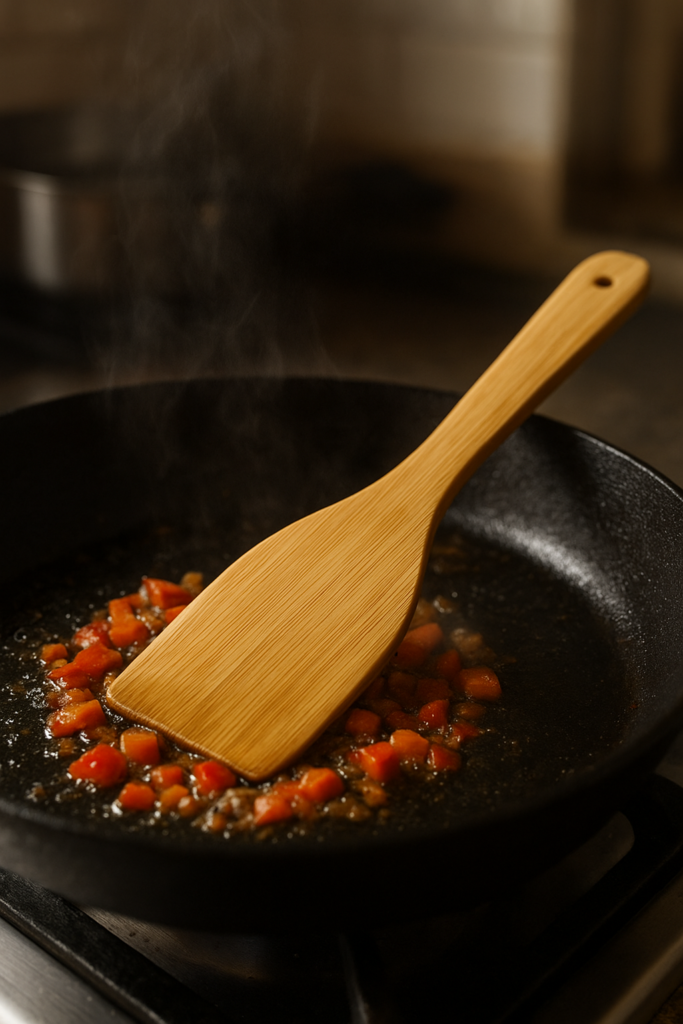
Will Bamboo Utensils Damage Your Cookware?
This was my biggest worry when switching. I didn’t want to ruin my pots and pans just to be eco-friendly.
Good news: Research specifically tested bamboo cutting boards against plastic and found bamboo released zero particles during normal cutting and chopping. The material is firm enough to be functional but soft enough not to damage cookware surfaces.
I’ve been using bamboo spatulas and spoons on my cookware for six months. The surfaces look exactly the same as before I switched. Metal utensils, on the other hand, will absolutely damage cookware coatings over time.
So your pots and pans are safe with bamboo. In fact, they’ll last longer because you’re using gentler tools every time you cook.
How Long Do They Actually Last?
Based on hundreds of user reviews scattered throughout the internet, bamboo utensils typically last 18-24 months with daily use. Some people report getting 2-3 years from higher-quality sets.
Compare that to plastic. Research found that old plastic cookware with signs of staining, heat damage, and scratches released more microplastics compared to newer alternatives. They can easily melt, crack, or become permanently stained within a few months of use.
[Image: Timeline showing bamboo set lasting 18-24 months versus multiple plastic spatulas failing at different intervals, with cost comparison below]
Keeping Them Clean: The Mold Question
Do Bamboo Utensils Mold? (The Honest Answer)
Yes, bamboo CAN mold if you don’t take care of it properly. I won’t sugarcoat this…if you leave wet bamboo sitting in a drawer or dish rack for days, you will get mold.
BUT, it’s completely preventable with a few seconds of effort. Here’s exactly what works.
Simple 3-Step Prevention Protocol
Step 1: Hand wash with regular dish soap. Nothing fancy needed. Wash your bamboo utensils like any other dish. Takes about 30 seconds.
Step 2: Immediately dry with a towel. This is critical. Don’t let bamboo air dry in your dish rack. After washing, grab a dish towel and dry the utensil completely. This takes literally 5 seconds per utensil.
Step 3: Store upright in a container so air circulates. Keep them in a utensil holder on your counter, standing upright. Air flows around them, so even if there’s residual moisture, it evaporates quickly. This is best practice for anything you wash, really.
That’s it. Wash, dry, store upright. Follow this routine and mold won’t be an issue.
[Image: Photo of proper bamboo utensil storage in ceramic holder on kitchen counter, utensils standing upright with space between them for air circulation]
The Dishwasher Question
Can you put bamboo in the dishwasher? Technically yes. Should you? No, not regularly.
The problem is prolonged exposure to high heat and water. Dishwashers run hot (140-160°F) for extended periods of time, which dries out bamboo and can cause the fibers to eventually separate. Hand washing takes 30 seconds and uses lukewarm water – it’s gentler on the material.
My rule: I always hand wash bamboo utensils. If you’re sick and really want to sanitize your utensils, an occasional dishwasher run won’t destroy them. Just don’t make it a daily habit, or they’ll degrade faster.
The Oiling Trick (Optional But Helpful)
Once every 2-3 months, rub your bamboo utensils with a light coat of food-grade mineral oil or coconut oil. This keeps the bamboo from drying out and prevents cracking.
Just put a few drops of oil on a paper towel, rub it over the utensil surface, let it sit for 5 minutes, then wipe off excess. Takes about two minutes for your whole set.
Is it necessary? Not really, no. It does, however, keep them looking nice and extends their lifespan. Think of it like conditioning a wooden cutting board.
Want my complete eco-kitchen maintenance guide? I’ve created a free downloadable checklist covering oiling schedules, cleaning hacks, and product care for all your sustainable swaps. Get it free here and never wonder “how do I take care of this?” again.
Bamboo vs. Plastic vs. Wood: The Real Comparison
Side-by-Side Breakdown
FEATURE | BAMBOO | PLASTIC | WOOD Heat Resistance | Excellent (up to 300°F+) | Poor (degrades at 200-250°F) | Good (up to 275°F) Microplastic Risk | None | High (196+ particles per oz) | None Chemical Leaching | None | Yes (BPA, formaldehyde) | None Antibacterial | Natural (lignin-based) | None | Minimal Durability | 18-24 months average | 3-6 months before issues | 12-18 months average Cost (typical set) | $12-25 | $8-15 | $15-30 Biodegradable | Yes (50-120 days) | No (400+ years) | Yes (6-12 months) Maintenance | Easy (hand wash + dry) | Easiest (dishwasher safe) | Moderate (oil periodically)
When Plastic Might Actually Be Better (Yes, Really)
We’re not here to shame anyone. But, there are actually scenarios where plastic makes more sense (it’s hard to even write that sentence):
Commercial dishwasher environments. If you run a restaurant with industrial dishwashers running dozens of cycles daily, the convenience of dishwasher-safe plastic might outweigh environmental concerns. Commercial bamboo would need constant replacement.
If you absolutely won’t hand wash. Be honest with yourself. If you know you’ll throw everything in the dishwasher no matter what, plastic will last longer than bamboo in that scenario. (Though reusable metal utensils would be even better.)
High-volume catering. Serving 500 people at an outdoor event where you truly can’t collect and wash reusables? Compostable disposables or plastic might be your only options. Just choose compostable when possible.
Make the choice that works for your life. Even switching one plastic tool to bamboo is progress.
Why I Chose Bamboo Over Wood
Wooden utensils are also a good eco-friendly choice, but bamboo wins on several fronts:
Bamboo grows 10 times faster than hardwood trees. Unlike traditional hardwoods, bamboo can be harvested every 3 to 5 years, while oak or maple trees take 20-40 years. How cool is that? This makes bamboo more sustainable even though both are renewable. And this is the main reason why bamboo is such an incredible wood when it comes to eco-friendly options.
Bamboo is incredibly sturdy – some bamboo species are purportedly even stronger than steel in terms of tensile strength. I still haven’t fully wrapped my head around that. It also resists scratches and dents better than most woods used for utensils, which of course translates to a longer lifespan.
Bamboo even has better natural moisture resistance. Wood utensils can swell, crack, or warp more easily when exposed to water repeatedly. Bamboo handles moisture better.
Price is similar ($12-25 for comparable quality), so it’s not like you’re paying a premium for the better environmental choice.
Looking for more ways to reduce waste while cooking? Check out my zero-waste cooking tips guide for simple strategies that save money and help the environment.
What’s New in 2025: Bamboo Innovations
Bamboo Bioplastics Are Here
This is genuinely exciting. Scientists have developed a method to produce strong, biodegradable plastic from bamboo that can biodegrade in soil within 50 days while maintaining strength, shapability, and thermal stability comparable to oil-based plastics.
The bamboo-based plastic displayed tensile strength of 110 megapascals and can be degraded in soil within 50 days or recycled while retaining 90% of its original strength. This means you get the durability advantages of plastic without the centuries-long environmental consequences.
Watch for bamboo bioplastic used in utensil handles, composite products, and packaging throughout 2025. It’s a genuine innovation, not greenwashing.
Regulations Driving the Shift
The EU banned single-use plastics in 2021, and enforcement is ramping up. Similar regulations are coming to US states – California and New York are leading with restrictions on disposable plastic cutlery, especially for restaurants and takeout.
What this means: Restaurants and food delivery services are switching to bamboo in bulk. Increased demand is driving down prices and improving availability. You’ll find bamboo options at mainstream retailers now, not just specialty eco-shops.
Certification Matters More Now
Not all bamboo is created equal. As demand increases, so does questionable sourcing. Here’s what to look for:
FSC (Forest Stewardship Council) certification. Ensures bamboo was harvested from responsibly managed forests that protect ecosystems and worker rights.
USDA Organic Biobased certification. Verifies the product contains organic materials and wasn’t treated with harmful chemicals.
Why does this matter? Some bamboo operations can be invasive to local ecosystems if not managed properly. Bamboo grows so fast that poorly managed farms can crowd out native species. Certified products come from operations that follow environmental and social responsibility standards.
Check product descriptions for these certifications. It’s worth the extra $2-3 to know you’re supporting responsible sourcing.
Want to dive deeper into sustainable kitchen trends? I break down everything coming in 2025 in my sustainable kitchen trends pillar post.
Best Bamboo Utensil Sets (Research-Backed Recommendations)
Best Overall: Totally Bamboo 5-Piece Cooking Utensil Set
Price: $12.99
What’s included: Large spoon, slotted spoon, spatula, fork, and spreader – the five tools you’ll use every day.
Why it’s recommended: FSC-certified sustainable sourcing, perfect size for most pots and pans, comfortable grip, safe for all cookware types, and the price is honestly unbeatable for the quality. This set has over 15,000 reviews on Amazon averaging 4.7 stars.
Pros: FSC-certified, heat-safe up to 300°F, smooth finish won’t damage cookware, comfortable grip that doesn’t get slippery when wet, great value at under $13.
Cons: The spatula edge could be slightly thinner for flipping delicate fish. Finish isn’t as polished as premium options – minor aesthetic thing that doesn’t affect performance.
Best for: Anyone starting their eco-kitchen journey on a budget. Families who cook daily and need durable tools. People who want to test bamboo before investing in premium options.
Health benefit: Zero BPA, phthalates, or chemical leaching based on food-safe certifications.
Environmental benefit: Using this set instead of disposables saves approximately 2,000-2,500 plastic utensils annually per household.
Best for Cooking: Bambu All-Purpose Spatula Trio Set
Price: $22.95
What’s included: Three spatulas with different shapes – angled for flipping, flat for scraping, curved for stirring.
Why it’s recommended: USDA Organic certified (no pesticides during growing), ergonomic handles, excellent heat resistance, thin beveled edges perfect for getting under eggs and fish.
Pros: Organic certification guarantees no pesticide residues, best heat performance (safe above 300°F based on organic bamboo properties), thin edges for precision cooking, company plants tree for each purchase.
Cons: Higher price – almost double basic sets. If you’re just starting out or don’t cook often, this might be overkill.
Best for: Home cooks who spend real time at the stove. Anyone who does lots of sautéing, stir-frying, or delicate cooking where precision matters.
Health benefit: Organic certification means zero pesticide exposure from the bamboo material.
Environmental benefit: Beyond biodegradable bamboo, the tree-planting program means your purchase contributes to reforestation.
Best Bulk/Party Option: World Centric Bamboo Cutlery Set
Price: $0.10-0.20 per utensil in bulk (packages of 100-500)
What’s included: Forks, knives, spoons individually wrapped in compostable packaging.
Why it’s recommended: CMA/FSC/USDA certified, compostable packaging, perfect for events where washing dishes isn’t practical, cost-competitive with plastic disposables.
Pros: Multiple certifications verify responsible sourcing, even the wrappers compost, sturdy enough for actual use (not flimsy), bulk pricing makes them affordable.
Cons: Not designed for long-term reuse – they’ll last one meal. Individually wrapped format creates more packaging (though it’s compostable). For daily lunches, get a reusable travel set instead.
Best for: Parties, picnics, outdoor events, school lunches where kids might lose reusables.
Health benefit: BPA-free alternative to plastic party ware.
Environmental benefit: Compostable within 120 days. A 40-person party saves 120 plastic utensils from landfills.
Best Premium: BlauKe Wooden Cooking Utensils Set (7-piece)
Price: $20-30
What’s included: Multiple spatulas, spoons, slotted spoon, ladle, tongs – seven pieces covering every cooking need.
Why it’s recommended: Beautiful craftsmanship, extra thick construction for durability, incredibly smooth finish, comfortable weight, heat-resistant, comprehensive variety.
Pros: Premium quality with visible attention to detail, thicker than standard utensils (more durable), smooth polished finish, good weight in hand, heat-safe above 300°F.
Cons: Higher price point – bigger upfront investment. Requires more frequent oiling (every 6-8 weeks). Some pieces are bamboo/wood mix rather than pure bamboo.
Best for: Serious home cooks wanting commercial-grade quality. People who cook multiple meals daily. Anyone willing to invest upfront for tools that’ll last 3+ years.
Health benefit: Heat-resistant above 300°F means zero concerns about material degradation or chemical release.
Environmental benefit: Premium durability means this set outlasts 2-3 cheaper sets, ultimately creating less waste over time.
Best Portable: Jungle Culture Bamboo Cutlery Travel Set
Price: $15-25
What’s included: Fork, knife, spoon, chopsticks, reusable straw, carrying pouch.
Why it’s recommended: 100% natural bamboo, portable canvas pouch, TSA-friendly, eliminates takeout plastic, lightweight.
Pros: Certified chemical-free, pouch keeps everything together, works for air travel, eliminates need for disposable utensils, includes reusable straw, weighs almost nothing.
Cons: Utensils smaller than full kitchen-size (by design for portability). Chopsticks take practice. Pouch gets stained over time. Not ideal for home cooking – this is for travel/work.
Best for: Office lunches, travel, camping, eating takeout or restaurant meals frequently.
Health benefit: You control what touches your food when eating out – no unknown plastic from restaurants.
Environmental benefit: Based on typical office lunch habits (40 meals over 2 months), this can prevent 92+ plastic utensils from being used and thrown away.
Make the Switch: Your Family and Planet Will Thank You
The research is clear. Plastic cookware contributes 2,409-4,964 microplastics annually to homemade food, while bamboo cookware introduces zero microplastics. Switching to bamboo eliminates that exposure completely while diverting 2,400+ plastic utensils from landfills yearly.
The health benefits are real. Zero chemical leaching means no BPA or phthalates getting into your kids’ food. Bamboo boards released zero microplastic particles during normal use while plastic boards released up to 196 particles per ounce of food. Natural antibacterial properties mean safer food prep.
Environmentally, the impact is immediate. Bamboo biodegrades in soil within 50 days, while plastic utensils will still exist in landfills in the year 2425. That’s not abstract – that’s measurable waste reduction from one simple $13 purchase.
You don’t have to overthink this. Start with one set – the Totally Bamboo 5-Piece Set at $12.99 is perfect for beginners. Use it for a month. See the difference. You’ll notice how much sturdier bamboo feels, how it doesn’t stain, how it doesn’t smell weird after cooking tomato sauce.
Then expand from there. Add a travel set for work lunches. Get serving utensils for family dinners. Stock compostable party cutlery for events. Each swap is another step toward a healthier kitchen and healthier planet.
Ready to make your first swap? Join 500+ families getting my weekly eco-kitchen tests, product reviews, and money-saving tips. Plus, download our free guide: “10 Kitchen Swaps That Saved Us $200 and Cut Toxin Exposure by 60%” – includes exact products, where to buy them cheapest, and one-year savings calculations. Click here for instant access.
Know someone trying to reduce plastic? Share this post. Every family that switches saves 2,400+ plastic utensils from landfills yearly. That impact multiplies when we share what works.
Keep going with your eco-kitchen transformation:
- Plastic-Free Kitchen Checklist: 25 Swaps for Beginners
- Non-Toxic Cookware Guide: Safest Options for Your Family
- Complete Eco-Kitchen Setup: The Ultimate Guide
Small changes add up. You’ve got this!
